
What Age to Start Club Volleyball:
The Evidence-Based Guide
Every volleyball parent faces the same question: when is the right time to move from recreational play to competitive club volleyball? The answer depends on your child's physical readiness, mental maturity, and genuine passion for the sport. This guide combines research from the American Academy of Pediatrics, USA Volleyball, and experienced club coaches to help you make the right decision.
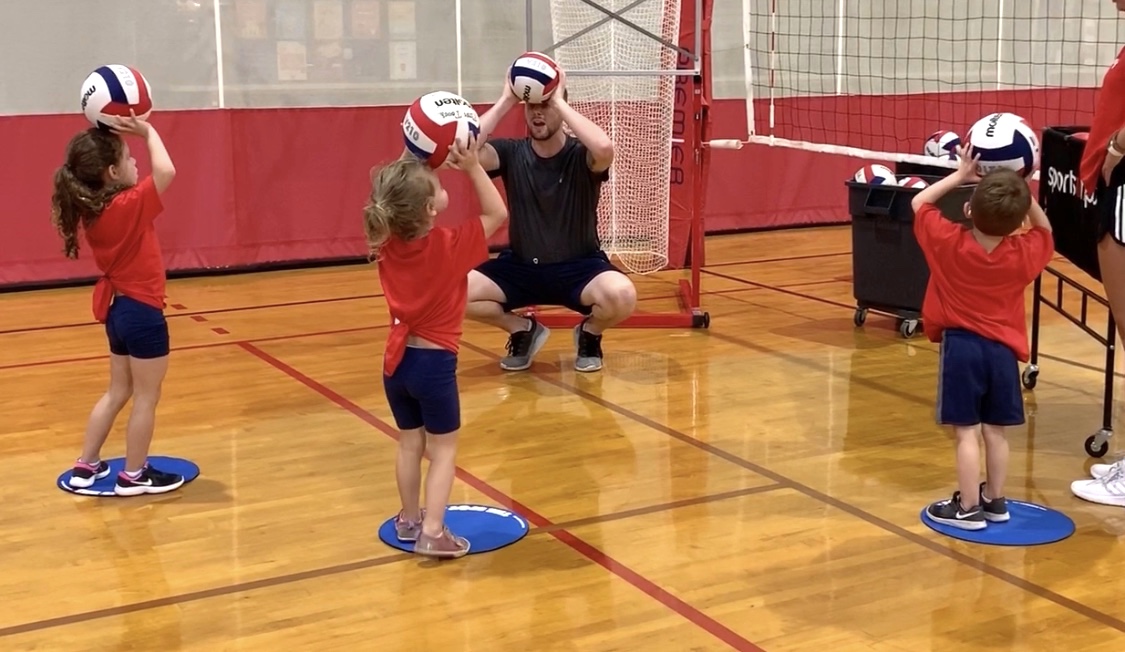
Young athletes learning volleyball fundamentals. Most coaches recommend starting structured club training between ages 10 and 12, when children are physically and mentally ready for competitive play.
The Four Development Stages
Youth volleyball development follows a well-researched progression that aligns with how children grow physically, cognitively, and emotionally. USA Volleyball's development model and the American Development Model both emphasize age-appropriate training that matches where athletes are in their development — not where parents wish they were. Here are the four stages and what each one means for your family.
FUNdamentals
Ages 6–9 · Movement literacy & love of the game
At this stage, the goal is not volleyball-specific skill development — it is building a foundation of movement literacy. Children should be running, jumping, throwing, catching, and learning to coordinate their bodies in space. Recreational volleyball programs at this age emphasize fun, basic ball handling, and social interaction. The American Academy of Pediatrics recommends that children under 10 participate in a variety of physical activities rather than focusing on a single sport.
Parent Tip
If your 7-year-old wants to try volleyball, look for recreational programs that emphasize fun and movement — not competitive club teams. The goal at this age is to fall in love with being active, not to master a bump pass.
Learning to Train
Ages 9–12 · Skill acquisition window
Sports scientists call ages 9–12 the “golden age of motor learning.” This is when children’s nervous systems are primed to acquire new movement patterns quickly and efficiently. For volleyball, this means it is the ideal window to learn proper passing technique, overhand serving, setting mechanics, and basic footwork patterns. Most coaches agree that this is the sweet spot for introducing structured volleyball training — whether through a developmental club program or a skills clinic.
Parent Tip
This is the age range where most coaches recommend starting club volleyball. Your athlete does not need to be the best player — they need to be coachable, curious, and willing to practice. Skills learned during this window tend to stick for life.
Training to Train
Ages 12–15 · Physical development & tactical understanding
As athletes enter puberty, their bodies undergo rapid changes in strength, coordination, and endurance. This stage is where volleyball training becomes more structured and position-specific. Players begin to understand offensive systems, defensive schemes, and the tactical nuances that separate recreational play from competitive volleyball. The 13U and 14U age divisions are the most popular in club volleyball — this is when the majority of serious players enter the club system.
Parent Tip
If your athlete is 12–13 and has never played club volleyball, this is still an excellent time to start. Many successful college players did not begin club volleyball until this stage. Athletic ability and coachability matter more than years of experience at this age.
Training to Compete
Ages 15–18 · Competition focus & position specialization
At this stage, athletes are refining their skills for high-level competition. Training intensity increases, and players typically specialize in a primary position. This is also when college recruiting becomes a factor for athletes with aspirations to play at the next level. The American Academy of Pediatrics suggests that single-sport specialization is most appropriate at age 15 or older — before this point, multi-sport participation provides broader athletic development and reduces injury risk.
Parent Tip
Even at 15–16, it is not too late to start club volleyball. Athletes who bring height, athleticism, and transferable skills from other sports can develop rapidly at this stage. Coaches value raw potential and work ethic alongside technical skill.
What the Research Says About Early Specialization
One of the biggest concerns parents face is whether starting club volleyball too early — or too late — will affect their child's long-term development. The research is clear: early specialization carries real risks, and multi-sport participation provides measurable benefits. Here is what the science says.
Risks of Early Specialization
- 70% of young athletes quit organized sports by age 13, often due to burnout from early specialization
- Half of all youth sports injuries are overuse injuries caused by repetitive motions in a single sport
- Risk increases significantly when training exceeds 16 hours per week or 8 months per year
- Mental health risks include depression, anxiety, and unhealthy perfectionism tied to performance
- Children who specialize early are more likely to experience social isolation from peers
Evidence-Based Guidelines
- The AAP recommends delaying single-sport specialization until age 15–16 for most team sports
- NATA guideline: weekly training hours should not exceed the athlete’s age (e.g., max 12 hours for a 12-year-old)
- Athletes should participate in their primary sport no more than 8 months per year
- Multi-sport participation through age 12–14 builds broader motor patterns and reduces injury risk
- LeBron James, Abby Wambach, and many elite athletes played multiple sports before specializing
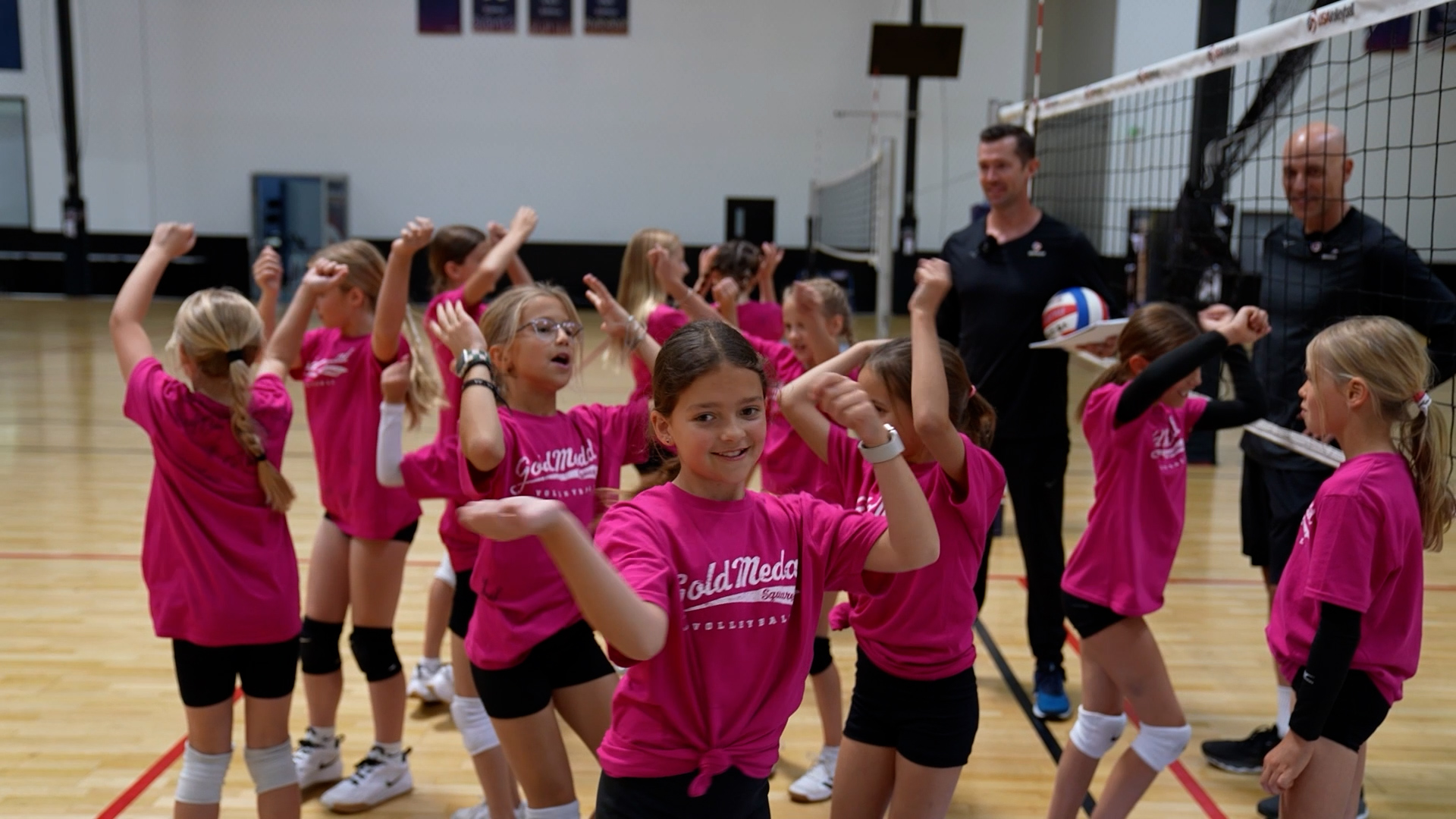
The Bottom Line
Starting club volleyball between ages 10 and 12 is ideal for most athletes, but there is no single “right” age. What matters more than the starting age is the quality of the program, the coaching philosophy, and whether your child is genuinely excited about the sport. A developmental club program at age 11 combined with participation in other sports is a stronger foundation than year-round volleyball starting at age 8.
Is Your Child Ready? The Readiness Checklist
Age is just one factor. Readiness for club volleyball depends on a combination of physical ability, mental maturity, and family commitment. Use this checklist to evaluate whether your athlete is prepared for the club volleyball experience.
Physical Readiness
Can overhand serve the ball over the net consistently
Key indicatorHas coordination to pass and set with reasonable accuracy
Key indicatorCan sustain 60–90 minutes of physical activity without excessive fatigue
Supporting factorHas basic lateral movement and jumping ability
Supporting factorMental & Emotional Readiness
Understands team concepts and can follow multi-step instructions
Key indicatorCan handle constructive criticism from coaches without shutting down
Key indicatorShows genuine interest in volleyball (not just parent-driven)
Key indicatorCan manage wins and losses with emotional resilience
Supporting factorCommitment & Logistics
Willing to attend 2–3 practices per week plus weekend tournaments
Key indicatorCan balance volleyball with schoolwork and other responsibilities
Key indicatorFamily can commit to the travel and financial requirements
Supporting factorAthlete is self-motivated to practice outside of team sessions
Supporting factorScoring guide: If your athlete checks most of the “key indicator” items in all three categories, they are likely ready for a competitive club program. If they check most physical items but fewer mental or commitment items, consider a developmental or recreational program first. There is no rush — the goal is to set your athlete up for long-term success, not short-term participation.
Why Multi-Sport Athletes Make Better Volleyball Players
One of the most common misconceptions in youth volleyball is that athletes need to specialize early to keep up with their peers. The data tells a different story. The Junior Volleyball Association reports that 40% of competitive club players ages 15–18 participate in at least one other sport. Here is how skills from other sports transfer directly to volleyball.
| Sport | Transferable Skills | Volleyball Benefit |
|---|---|---|
| Basketball | Vertical jump, court awareness, fast-break transitions, hand-eye coordination | Blocking, attacking, defensive positioning |
| Soccer | Footwork, endurance, spatial awareness, team communication | Court movement, serve receive positioning, stamina |
| Swimming | Shoulder strength, core stability, cardiovascular endurance | Serving power, hitting endurance, injury prevention |
| Gymnastics | Body control, flexibility, explosive power, spatial awareness | Diving, athletic plays, overall body control |
| Track & Field | Speed, vertical jump, explosive starts, competitive mindset | Transition speed, blocking reach, attacking power |
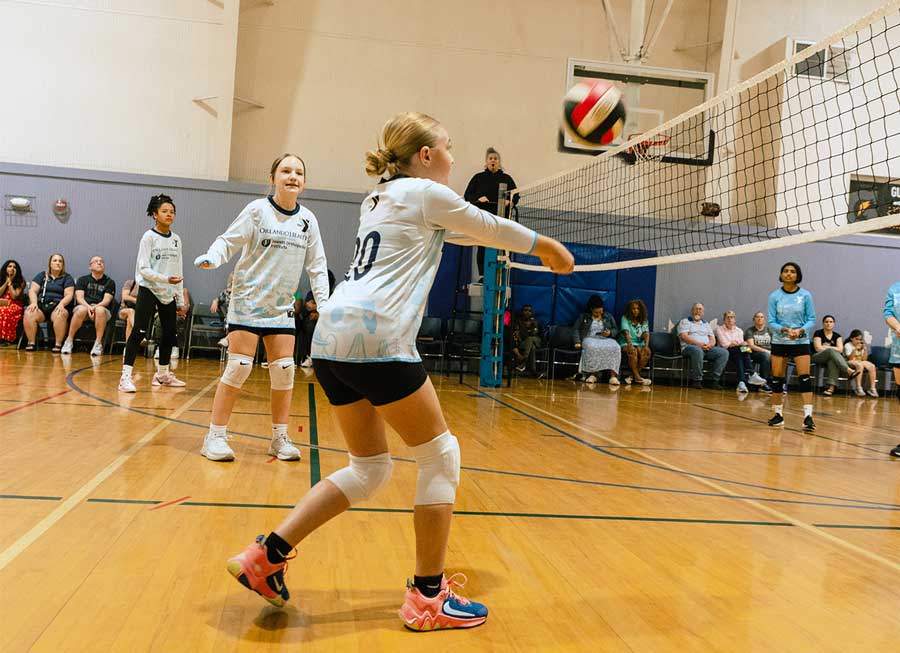
Key Takeaway
Do not pull your athlete out of other sports to focus exclusively on volleyball before age 15. The skills they develop in basketball, soccer, swimming, and other activities will make them a more complete volleyball player in the long run. Many clubs now offer flexible scheduling specifically to accommodate multi-sport athletes.
What Club Volleyball Actually Costs
Understanding the financial commitment is an essential part of deciding when to start club volleyball. Costs vary significantly by region, club tier, and age division. Here is a realistic breakdown of what families can expect to spend per season.
| Category | Typical Range | Notes |
|---|---|---|
Club Dues | $1,500–$5,000+ | Varies by region, club tier, and age division. National-level programs cost more. |
Tournament Fees | $200–$800 | Usually 4–10 tournaments per season, some included in dues. |
Travel Costs | $500–$3,000+ | Hotels, gas, flights for regional and national tournaments. |
Equipment | $150–$400 | Shoes, kneepads, practice gear, team uniform. |
Private Lessons | $0–$1,500 | Optional but common for skill acceleration. $40–$80/session. |
Total estimated cost per season: $2,500–$8,000+ depending on competitive level and travel requirements. Many clubs offer payment plans, sibling discounts, and need-based financial assistance. Always ask for a complete cost breakdown before committing, and factor in the time commitment for parents who will be driving to practices and tournaments.
How PACE Helps Parents Make the Right Decision
Deciding when to start club volleyball is easier when you understand your athlete's competitive profile. The PACE assessment measures four dimensions of competitive character — Persistence, Adaptability, Coachability, and Effort — that predict how well an athlete will respond to the club volleyball environment.
Persistence
Does your athlete push through challenges, or do they get discouraged when things get hard? Club volleyball requires resilience through tough practices, losses, and skill plateaus.
Adaptability
Can your athlete adjust to new coaches, teammates, and game situations? Club volleyball exposes players to different coaching styles and competitive environments.
Coachability
Does your athlete respond well to constructive feedback? Club coaches provide direct, specific instruction that requires athletes to accept and apply corrections.
Effort
Does your athlete give consistent effort in practice, not just games? Club volleyball demands daily commitment to improvement, not just showing up for matches.
The PACE assessment takes 5 minutes, is completely free, and gives parents an objective data point to complement their own observations. It does not replace your judgment as a parent — it adds a research-backed perspective that helps you make a more informed decision about timing and program selection.
Frequently Asked Questions
The most common questions parents ask about starting club volleyball — answered with the detail and honesty you actually need.
Is 14 too old to start club volleyball?
Absolutely not. Age 14 is actually considered an excellent entry point by many coaches. Athletes at 14 have better coordination, can serve overhand consistently, and understand team concepts more quickly than younger beginners. Many successful college volleyball players did not start club until 13 or 14. What matters most is athleticism, coachability, and willingness to work hard — not how many years of club experience a player has.
Should my child play club volleyball year-round?
The American Academy of Pediatrics and the National Athletic Trainers’ Association both recommend that young athletes participate in their primary sport no more than 8 months per year. Year-round play in a single sport increases the risk of overuse injuries and burnout. Most club volleyball seasons run from November through May or June, which naturally allows for an off-season. Use the remaining months for rest, cross-training, or other sports.
What is the difference between recreational and competitive club volleyball?
Recreational programs focus on fun, basic skill development, and participation — everyone gets equal playing time and the emphasis is on learning. Competitive club volleyball involves tryouts, more intensive training (2–3 practices per week), travel to tournaments, and a higher level of commitment. Most athletes start in recreational programs and transition to competitive club when they demonstrate readiness and interest.
How do I know if my child is ready for club volleyball?
Look for three categories of readiness: physical (can they serve, pass, and sustain activity for 60–90 minutes?), mental (can they handle coaching feedback and understand team concepts?), and commitment (are they willing to attend regular practices and weekend tournaments?). The most important factor is genuine interest — if the drive is coming from the athlete rather than the parent, they are more likely to thrive in a club environment.
Will playing multiple sports hurt my child’s volleyball development?
Research consistently shows the opposite. Multi-sport athletes develop broader motor patterns, experience fewer overuse injuries, and often outperform single-sport specialists in the long run. Skills from basketball (jumping, court awareness), soccer (footwork, endurance), and gymnastics (body control, flexibility) transfer directly to volleyball. The Junior Volleyball Association actively encourages clubs to accommodate multi-sport athletes.
How much does club volleyball cost per season?
Total costs typically range from $2,500 to $8,000+ per season depending on your region, the club’s competitive level, and travel requirements. Club dues ($1,500–$5,000) are the largest expense, followed by travel costs for tournaments. Many clubs offer payment plans, and some provide financial assistance or scholarships. Before committing, ask the club for a complete cost breakdown including all fees, travel expectations, and equipment requirements.
What should I look for when choosing a club for a beginner?
For first-time club players, prioritize coaching quality and development philosophy over competitive results. Look for clubs that offer developmental or novice-level teams, have coaches with experience teaching beginners, and emphasize skill development over winning. Ask about the coach-to-player ratio, practice structure, and how playing time is distributed. A good beginner club will make your athlete better and keep them excited about the sport.
Ready to Take the Next Step?
Whether your athlete is 9 or 15, the best time to start is when they are ready — physically, mentally, and emotionally. Use the PACE assessment to understand your athlete's competitive profile, then browse our directory to find the right club for their development stage.